15
Dicembre
2022

VEGETABLE-TUNNING

Vegetable tanning: why it’s the best

When we talk about leather we have to talk about the tanning process and Italy is the world leader in vegetable tanning. Have you ever wondered what vegetable tanning is, what are the differences between the various tanning processes and why we hear so much about vegetable tanning? In this article I will briefly explain the world of vegetable tanning.

la concia al vegetale


What does tanning mean?

Tanning is the treatment to which hides and skins are subjected in order to preserve and work them. Its purpose is to transform the animal’s putrescible skin into a product that is rot-proof, hygienic, breathable and resistant. The chrome tanning process is the most common process today as it is faster and less expensive but has a serious environmental impact. For this reason it is not part of the policy of Florence Leather Market. This is the reason why in our opinion vegetable tanning is the best process.


Vegetable tanning

Vegetable tanning is done through the use of tannins. Tannins used in the vegetable tanning process are natural substances extracted using eco-sustainable methods: for Tara tannin it is sufficient to grind the pods to a powder, while for chestnut or quebracho tannin the wood is chopped into chips which, in contact with hot water, releases the tannin in solution, as if it were an infusion.


Is the vegetable tanning process dangerous for the environment?

The vegetable tanning process is absolutely the most eco-sustainable tanning method.Tannins are vegetable substances, safe for man and the environment; did you know that the waste mud resulting from the tanning process can be easily recovered and transformed into material for the creation of bricks for the building industry. Also objects created from vegetable-tanned leather can last for generations and once their cycle of use is over, they can be easily disposed of and transformed into fertilizers for agriculture.


How can vegetable-tanned leather be distinguished from other materials?

Unfortunately, it is difficult for the untrained eye to distinguish vegetable tanned leather from the chrome one. We suggest using your nose: tanning with tannin permeates the leather with an intense perfume, the unmistakable “smell of leather” that a plastic material certainly does not have and that is scarcely present in other tanning methods.The same difference is also evident in terms of softness and pleasantness to the touch.


With global warming just around the corner, the sustainability of companies is fundamental for the healthy development of the planet and this is why the entire line of Florence Leather Market reflects these parameters. Take a look at our website and be won over by the quality of our products.

15
Dicembre
2022

la concia al vegetale

La concia al vegetale: ecco perché è la migliore

Quando si parla di pelle non si può non parlare del processo di concia in quanto l’Italia è leader mondiale per quanto riguarda la conciatura al vegetale. Vi siete mai chiesti però cos’è la conciatura? quali sono le differenze dei vari processi di concia e perché si sente tanto parlare di conciatura al vegetale? In questo articolo vi spiegherò brevemente il mondo della conciatura del pellame.

la concia al vegetale

Cosa si intende per concia

La concia è il trattamento a cui vengono sottoposte le pelli al fine di conservarle e lavorarle ed ha come scopo quello di trasformare la pelle putrescibile dell’animale in un prodotto imputrescibile, igienico, traspirante e resistente. Il processo  di concia al cromo è il processo più diffuso oggigiorno in quanto più veloce e meno costoso ma a causa dell’utilizzo di metalli pesanti appunto come “il cromo”, comporta un grave impatto ambientale. Proprio per questa ragione non fa parte della politica di Florence Leather Market. Ecco di seguito spiegato il perché la concia al vegetale secondo noi è il processo migliore.

La concia al vegetale

La concia al vegetale viene fatta attraverso l’utilizzo dei tannini. I tannini utilizzati nella concia al vegetale sono sostanze naturali, estratte con metodi eco-sostenibili: per il tannino di Tara è sufficiente macinare i baccelli fino a ridurli in polvere, mentre per il tannino di castagno o di quebracho il legno viene sminuzzato in piccoli pezzi detti chips che, a contatto con acqua calda, rilascia il tannino in soluzione, come se fosse un infusione


La concia al vegetale con tannino è un processo inquinante?

La concia al vegetale con tannino è in assoluto il metodo di concia più ecosostenibile. I tannini sono sostanze vegetali, sicure per l’uomo e per l’ambiente; In aggiunta i fanghi di risulta della concia possono essere facilmente recuperati e trasformati in materiale per la creazione di laterizi per l’edilizia. Inoltre gli oggetti creati in pelle conciata al vegetale possono durare per generazioni e una volta terminato il loro ciclo d’uso, possono venire smaltiti facilmente ed essere trasformati in fertilizzanti per l’agricoltura.


Come si fa distinguere la pelle conciata al vegetale da altri materiali?

Purtroppo è difficile per un occhio poco esperto riconoscere una pelle conciata al vegetale rispetto al cromo. Noi consigliamo di aiutarci molto il naso: la concia al tannino permea le pelli di un profumo intenso, l’inconfondibile “odore di cuoio” che un materiale plastico certamente non ha e che è poco presente negli altri metodi di concia. La stessa differenza è evidente anche in termini di morbidezza e di piacevolezza al tatto. 


Con il riscaldamento globale alle porte, la sostenibilità delle aziende è fondamentale per uno sviluppo sano del pianeta ed è per questo che tutta la linea di Florence Leather Market rispecchia questi parametri.  Dai un’occhiata al nostro sito e fatti conquistare dalla qualità dei nostri prodotti.

8
Dicembre
2022

LEATHER-HANDCRAFT-COURSES

Leather handcraft courses: here what you will learn

Working with leather is one of the oldest crafts in the world that Tuscan artisans manage to make more alive and relevant than ever with their own hands. In our workshop, designers make custom leather goods and give new life to antique pieces, with the aim of enhancing the quality of the raw material and finishing it with a handcrafted touch. In this article, I’ll briefly explain what they teach in leather goods schools by revealing the secrets of leather and its workmanship.

LEATHER HANDCRAFT COURSES


Here are some fundamentals in the art of leather goods

The raw material

In any self-respecting course you cannot fail to dedicate the right amount of importance to leather. How the leather passes from the raw material to the final product, the differences between the various leathers and how to distinguish the good from the bad. The first phase of tanning consists in detaching the hide from the animal carcass, mechanically or manually. The skin then undergoes salting and drying, to preserve it from external bacteria. This is followed by the actual tanning process to transform the leather into hide.It is essential to know how to recognize a real product from a fake one and we at Florence Leather Market have an article  dedicated to that too.


The craftsman’s tools

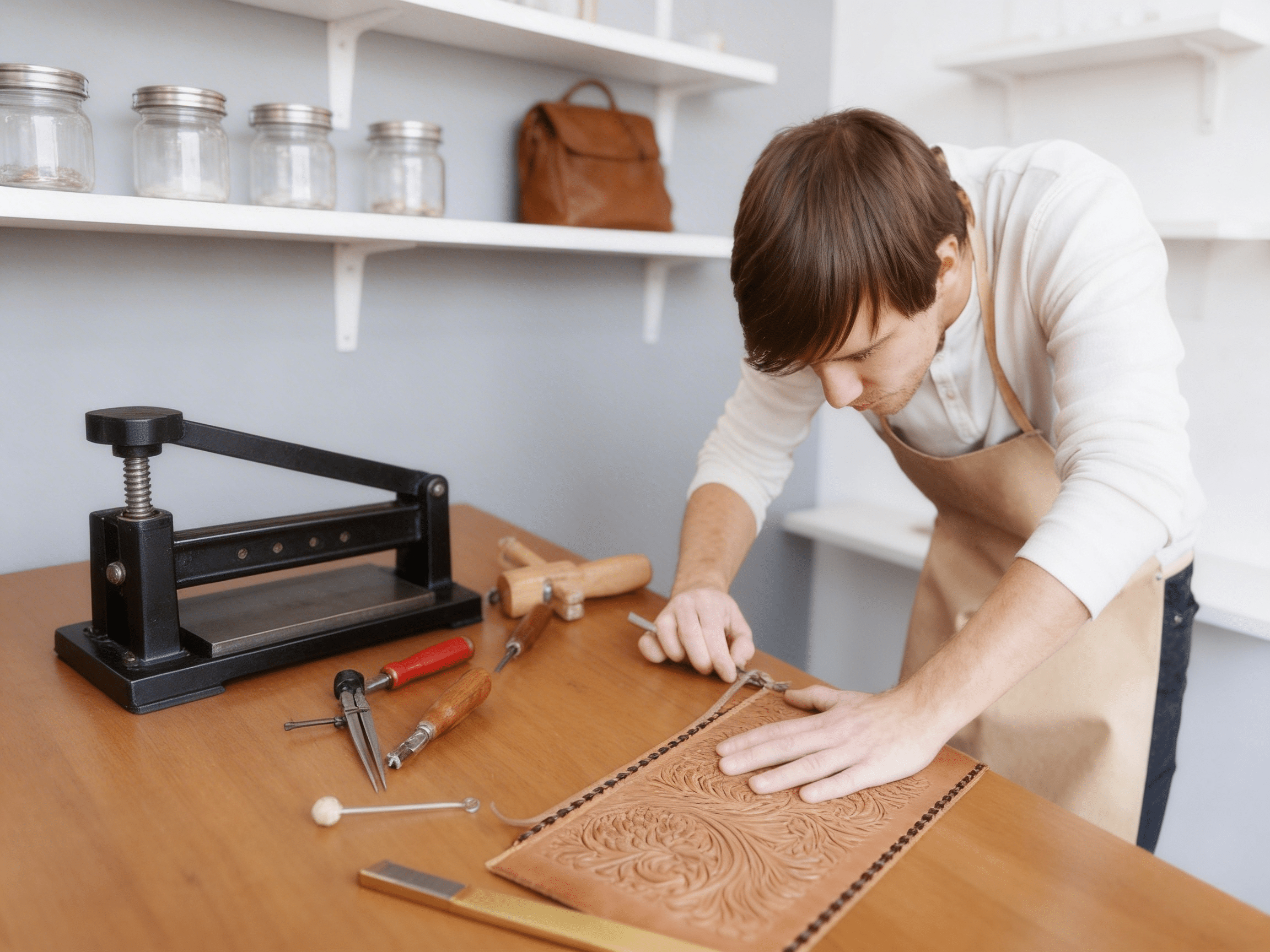
There are many tools to use in the field of leather goods, but we can divide them according to their functionality; we have tools dedicated to modelling, cutting and preparation, assembly and packaging, shaping, colouring and fastening and finally equipment dedicated to quality control. In the search towards the art of leather goods, it is of fundamental importance to master the use of different equipment and therefore, it is important to rely on masters who can facilitate our learning. Once you have mastered the various tools of the trade, you can begin to assemble your first product for your portfolio.


Here are the phases of leather processing

First you need to have in mind what you want to create and then have a drawing to follow with the various measures and the various notes that will help you throughout the process. Then you proceed with the various working processes.


cutting and sharpening of the leather

We start with the cutting and sharpening of the leather, preparing a cardboard template, which reflects the piece of leather you want to cut. Tracing the contours with a pencil on the straight side of the leather, we follow the track with the awl pressing lightly to create a thin but deep enough incision and through the use of a coramella we finish the cut.


  1. Bonding: after having cut out our leather parts necessary for the assembly we can move on to gluing.To glue the leather you can use the classic vinyl glue and all the cyanoacrylate glues, even if the most effective glues for yield and durability are the contact glues. 


  1. Stitching: once the gluing phase is over, let’s move on to stitching. A centuries-old technique still practiced today by luxury brands is the traditional saddle stitch, it is therefore important that a course goes through the most important steps, from the selection of the thread, the calculation of the length, the preparation of the leather up to the actual sewing.


  1. Edge processing: finally we move on to edge working, sealing all the glued and sewn layers of leather requires a few steps in the right sequence so that the edge is not only aesthetically smooth but also lasts for a long time.


If you are interested in the world of leather in our opinion these are the fundamental steps you should focus on to aspire to become a real leather master. Take a look at our website to see how Florence Leather Market uses modern style craftsmanship techniques.


8
Dicembre
2022

Scuola di pelletteria

Scuola di pelletteria: ecco cosa si può imparare

La lavorazione del cuoio è uno dei mestieri più antichi al mondo che manualmente, artigiani toscani riescono a rendere più vivo e attuale che mai. Nel nostro laboratorio, i designer confezionano articoli di pelle personalizzati e danno nuova vita a pezzi antichi, con l’obiettivo di esaltare la qualità della materia prima e di rifinirla con un tocco artigianale. In questo articolo, ti spiegherò brevemente cosa insegnano nelle scuole di pelletteria rivelando i segreti del cuoio e della sua lavorazione.

Scuola di pelletteria

Ecco alcuni elementi fondamentali nell’arte della pelletteria

La materia prima

In ogni corso che si rispetti si deve dedicare la giusta importanza al cuoio. e’ necessario conoscere come la pelle passa dalla materia prima al prodotto finale, le differenze tra le varie pelli e come distinguere il buono dal cattivo. La prima fase della conciatura consiste nello staccare la pelle dalla carcassa dell’animale. La pelle poi andrà sottoposta a salatura e seccatura, per preservarla dai batteri esterni. Fatto questo si procede con la conciatura vera e propria per trasformare la pelle in cuoio. È fondamentale saper riconoscere un prodotto vero da uno finto e noi di Florence Leather Market abbiamo un articolo dedicato anche per quello.

Gli strumenti dell’artigiano

Sono davvero tanti gli attrezzi da utilizzare nel campo della pelletteria, possiamo però suddividerli in base alla loro funzionalità; abbiamo strumenti dedicati alla modelleria, taglio e preparazione, sagomatura, coloratura e fissaggio. È di fondamentale importanza padroneggiare l’utilizzo della diversa attrezzatura e quindi, è importante fare affidamento a maestri che possono facilitarne l’apprendimentoDopo aver imparato a maneggiare i vari attrezzi del mestiere, è possibile cominciare a assemblare il vostro primo prodotto da inserire nel vostro portfolio. 


Le fasi di lavorazione del cuoio 

Per prima cosa bisogna aver bene in mente che cosa si vuole creare e quindi avere un disegno da seguire con le varie misure ed i vari appunti che vi aiuteranno durante tutto il processo. Successivamente si procede con i vari processi di lavorazione.

  1. Taglio e l’affilatura del cuoio: iniziamo con il taglio e l’affilatura del cuoio, preparando un modello di cartone, che rispecchia il pezzo di cuoio che si vuole tagliare. Tracciando i contorni con una matita sul lato dritto del cuoio, si percorre la traccia con il punteruolo pressando leggermente per creare un’ incisione sottile ma abbastanza profonda e tramite l’utilizzo di una coramella si finisce il taglio.


  1. Incollaggio: dopo aver ritagliato le nostri parti di pelle necessarie all’assemblaggio possiamo passare all’incollaggio. Per incollare il cuoio si può usare la classica colla vinilica e tutte le colle cianocriliche, anche se la più efficace per resa e durabilità sono le colle a contatto. Cucitura : finita la fase di incollaggio passiamo dunque alla cucitura. Una tecnica secolare praticata ancora oggi dai marchi di lusso è il tradizionale punto sella https://spiegato.com/cose-un-punto-sella, è importante inoltre sapere come selezionare il filo e calcolarne la lunghezza.


  1. Lavorazione dei bordi: infine si passa alla lavorazione dei bordi, sigillare tutti gli strati di pelle incollati e cuciti richiede alcuni passaggi nella giusta sequenza in modo che il bordo non sia solo esteticamente liscio ma duri anche a lungo


Se sei interessato al mondo della pelle, questi sono gli step fondamentali sul quale ci si dovrebbe focalizzare per ambire a diventare un vero e proprio maestro del cuoio. Dai un occhiata al nostro sito per vedere come Florence Leather Market utilizza tecniche di artigianato in stile moderno.

29
Novembre
2022

Backpack

Backpack: 3 tips on how to choose it

Backpacks have now become one of the most popular and in vogue accessories of the moment. This is thanks to their functionality and practicality that makes them perfect to use in our daily life. The dilemma arises when we do not have clear ideas on how to choose the backpack that is right for us. Especially in the face of the vast choice that the market offers. In this article I will show you some tips that we consider essential when choosing a backpack.

qualità dello zaino

Here are our 3 tips on how to choose the perfect backpack 

QUALITY

By nature, the backpack is subject to bumps and wear throughout its lifetime, whether it is your faithful daily travel companion, or for one dedicated to sports or holiday purposes. Despite this, it is understood that a backpack must last over time, even the cheap Nylon versions. For this reason, considering the frequent use of a backpack, why not spend a little more and buy one that will not only look good, but will also be a pleasure to carry? When it comes to quality and therefore durability, the first material that comes to mind is without a doubt LEATHER resistant and good-looking, which leaves a pleasant sensation both to the touch and to the smell that give it a real sense of superiority. Italy is famous for the craftsmanship of leather, the use of high quality materials combined with a unique style all over the world and these are the pillars on which Florence Leather Market bases the creation of its products.


FUNCTIONALITY

Backpacks are now available in all shapes and sizes and that is why, before making a hasty purchase, we recommend that you understand the use of the latter and consequently understand what its ideal dimensions will be. If you need a backpack for daily use to commute to work, or you’re thinking to buy a backpack to go to university, we must take into account the capacity necessary for any devices such as laptops, books and even the lunchbox. An example could be our “Unisex leather backpackcharacterized by its simplicity and versatility. If, alternatively, we are looking for a backpack to replace the handbag, we can opt for backpacks with a lower volume and focus on practicality of use. Some examples could be backpack Luminosa” and “Gabriele”. When making your size decision, it is also important to consider your height. If you are petite, a backpack that is too large may not be suitable for you. Also pay attention to comfort. If you are looking for a small and light backpack, thinner straps will be fine but, conversely, if you are going to use it to carry heavy things and for long periods, you may want to look for one with thicker straps.


STYLE

Choosing a backpack is always a personal decision influenced by your lifestyle and your needs but this does not mean that you should abandon good taste. Florence Leather Market brings with it the Italian style by creating backpacks, bags and accessories for every eventuality and occasion:

In short, there are choices in abundance…


Now that you have a clearer idea of ​​how to deal with the backpack theme, visit our website and take a look at how Florence Leather Market is establishing itself on the market with the creation of backpacks that precisely follow the idea of ​​quality, functionality and style.